Pastures, harvests & shepherds · Podpoľanie
The fujara, Slovakia’s shepherd flute
A long wooden flute whose breath and overtones tell part of Slovakia’s pastoral story.
What it is
The fujara is associated with shepherds in central Slovakia. Players and instrument makers keep the music alive through performances, teaching and instrument making.
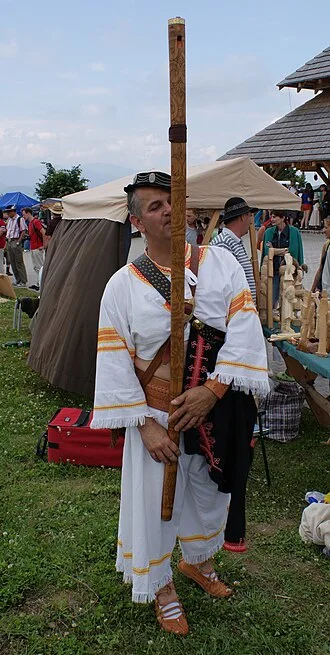
The player holds the wooden flute upright. A shorter tube carries the breath into the main pipe, leaving the hands free to reach the three finger holes. More force in the breath can bring out higher notes without a change in fingering. In a flourish called the rozfuk, several notes sound in quick succession. Listen to the change in colour when the player returns to the low register. The pauses are worth hearing too, as the player takes a breath or gives a note time to fade.
The fujara belongs especially to the shepherding culture of central Slovakia. The folklore festival in Detva, below Poľana, has helped maintain the craft through its competition for makers of folk instruments. A maker can explain how a length of wood is chosen and worked and what they listen for when testing the finished flute. Look at the decoration while you have a chance to see the instrument up close. In a recording from the Centre for Traditional Folk Culture, Jozef Rybár of Detva plays and sings. Listen for the alternation between a human voice and the sound of the pipe.
Try to remember a short phrase as you listen. When it comes round again, the player may give it a different emphasis. At the festival, ask about the song the player chose or who taught it to them. At a makers’ stall, compare the length and decoration of different instruments and ask where the shorter tube feeds air into the pipe.
What you’ll see & taste
- Listen for deep notes and rising overtones. A good demonstration lets you hear how the player changes the sound by controlling the breath.
- Look for an instrument-making session or a fujara performance in the Detva programme. A smaller session gives you more time to hear the flute on its own.
How to be a good guest
- Let the performance finish before speaking and ask before recording. «Dobrý deň» is a greeting and «Ďakujem» means thank you.
Where to experience it next
No upcoming dates are confirmed yet.
Documented events (1)
Detva · Detva
Folklore Celebrations below Poľana 2025
Next date unconfirmed · past editions for reference
The 58th Detva folklore celebration included a traditional craft fair and workshops in July 2025.
Editions and practical information ↗